
Heritage Culinary Artifacts

Heritage Culinary Artifacts

  • Morsels
  • About
  • Shop
  • Contact
The tide was turning and I was becoming anxious.  No matter the respect shown to the open ocean, she treats us with great indifference; the Moon’s gravitational pull her only master.   Given the riveting scenery, I had taken my
time hiking to …

The tide was turning and I was becoming anxious.  No matter the respect shown to the open ocean, she treats us with great indifference; the Moon’s gravitational pull her only master.   Given the riveting scenery, I had taken my time hiking to the beach’s rocky point, without seeing another soul, a good long hour away.  Northern California’s Tidelog noted a very early morning high tide and the warm winter sun was now almost directly overhead.

Most fishermen will tell you, ad nauseum and often with a non-pedigreed beer in hand, the best times to surf cast for dinner are the lower light hours after sunrise or before dusk.  Fishing a steeper beach during an incoming tide is also ideal, as the rising waters dislodge sand crabs and other small vertebrates from their homes, depositing them into the troughs where the waves break, encouraging fish to feed.  

An 11-foot surf rod and reel was split in half and tucked across a treasured L.L. Bean bag, sewn with nautical blue piping and boasting my initials in a blocky monogram, a long-ago gift from my mother during our better years.  Lining the outside pocket were thick crackers from a nearby bakery’s wood-fired oven, and hunks of Gouda, aged half a decade and crunchy with salt crystals. Tucked inside were the day’s tools: garishly colored fishing lures, a handmade trout priest, chunky four-ounce pyramid sinker weights, a dozen small hooks, and a semi-frozen block of anchovies.  The hooks are teeny tiny, designed to hold tightly onto the bait, making it difficult for the craftier fish to pinch.   In cards, ‘fish’ refers to an incompetent player whose weaknesses can be easily exploited by the card ‘shark’.  Surely a misnomer, as I’ve often found it’s the fish holding the good hand, sending me home sunburned and empty-handed.

At the local sporting shop in search of bait, an old man with crazed eyes and terribly weathered skin reported the rocky outcroppings at the beach’s south end to be covered in mussels. Bivalves and sand crabs are fine enticements on the end of a hook, and can also be chummed into the water’s edge to attract fish.  He warned me to be mindful of the ocean, as sneaker waves are not uncommon, easily dragging off unsuspecting souls and their canine companions.  It’s the dogs that survive, he cackled.

Armed with a flat stone for dislodging the mussels and an old carbon steel knife for prying them open, I darted between the waves, scouring the tide pools and combing through the wigs of seaweed concealing the rocks’ baldpates.  Not one clam did I find.

Looking beyond the peaks of stone, woefully unadorned of mollusk, a winter society ball was in full swing.  Dancing diamonds glittering as far as is the sea made it difficult to be annoyed by the old man’s misinformed clamming commentary. As a set of large waves began to crash against the rocks, I hiked back up the beach, stopping near a congregation of seabirds floating in gentler surf, their meeting ground a reliable indication of fish.  Planting the surf spike deep into the soft sand far above the water’s edge, I reassembled the rod and reel and got busy tying the weights and hooks onto the line.

Surfperch are plentiful and hooked year round off Northern California’s coastline, as opposed to a more seasonal harvesting of the tastier halibut, the fish of my literal wet dreams. Surfperch are often found in the shallow waters that flow over sandy bottoms, rocky formations, or forests of kelp.  Calico and Redtail surfperch feed along sandy beaches, while Rubberlip, Black, and Pile perch prefer dining in rockier outcroppings.

Within the family Embiotocidae, surfperch are Perciformes, meaning perch-like.  Perciform is the largest order of the Earth’s vertebrates, which includes 41% of all bony fish.  Surfperch are flatter fish with oblong bodies, measuring in length from five to eighteen inches.    Instead of being notched, their dorsal fins are continuous, and their tail is forked. The colors and patterns vary, depending upon the species of surfperch and the time of year.

California’s daily fishing limit for surfperch is a-too-generous-in-this-day-and-age twenty, in any combination of all the species, with not more than ten fish from any one species.  But at this late hour, I’d be lucky to get even a nibble.

Now warmish and slimy, I cut a few anchovies into smaller pieces, threading them onto the two-pronged hooks.   Stripping to a tee shirt and pulling up my pant legs, I edged into the surf, the chilly waters immediately anesthetizing my feet.  I cast into the troughs where the waves broke and then further out into the more placid holes of deeper water.   Lost in reverie, I was transported to an east coast beach at sunset, my father and I hauling onto the sands a dizzying number of bluefish and stripers from the dark waters.  As we cleaned the oily fish by the lighthouse’s strobe, he encouraged me to be methodical in my fishing:  if the water’s current is moving to the right, cast to the left and the bait will be pushed along; hold the rod tip high so the line doesn’t drag on the waves; retrieve your bait slowly and steadily, bouncing it along the bottom, and reeling only to pick up slack.

Interrupting my thoughts were three fat seagulls hovering nearby, completely intent on a late January lunch of rotted anchovy.  With frightful precision, they took turns furiously dive-bombing each carefully landed cast, gobbling my bait. With fists raised, I yelled and screamed into the afternoon winds, finally giving up and burying at sea the remaining putrid fish.

Returning to the quaint, drafty cabin, I read the instructions written by Connecticut outdoorsman Charlie Van Over, framed and set on the mantle, for lighting a proper fire.  I quickly had a roaring blaze, warming my still-frozen toes and drying my pants, which hung from the arms of a corduroy upholstered couch, its cushions low to ground from years of fireside contemplations. Tucked into the red and white coals were phallic-looking fingerling potatoes, purchased from a 24-7, payment-on-your-honor farm stand in a neighboring town.  Roasted until the flesh was creamy, the potatoes were smothered in French butter and gobs of thick sour cream.  Instead of my anticipated dinner of fire-grilled fish, the tubers were paired with charred, stalky broccolini flecked with hot peppers, garlic, and a flaky salt eccentrically and obsessively carried in my bag.  I managed through the better part of a bottle of Scavino’s Cannubi Barolo, still too young at twelve years of age, while plotting how to best land a perch on my plate for the next night’s supper.

February 26, 2015 by Lisa Minucci
February 26, 2015 /Lisa Minucci
Cows grazing at sunset. (at Point Reyes National Seashore: Tule Elk Reserve)

Cows grazing at sunset. (at Point Reyes National Seashore: Tule Elk Reserve)

January 31, 2015 by Lisa Minucci
January 31, 2015 /Lisa Minucci
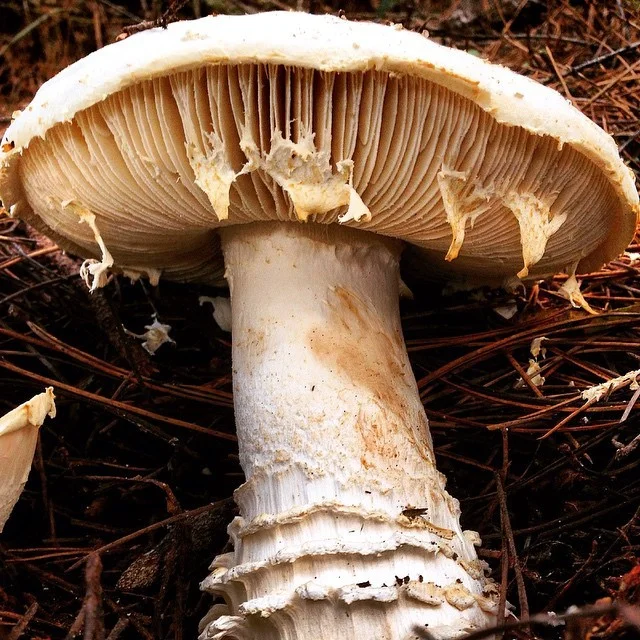
‘Shroom. (at Point Reyes National Seashore)

‘Shroom. (at Point Reyes National Seashore)

January 26, 2015 by Lisa Minucci
January 26, 2015 /Lisa Minucci
The mold had slowly crept in, its Mongolian olive green fur jacketing the leg like a dyed shearling coat from another era.  Patches of an earthy brown funk also freckled the skin, but none was the dreaded black mold seen in years’ prior.  Black mold…

The mold had slowly crept in, its Mongolian olive green fur jacketing the leg like a dyed shearling coat from another era.  Patches of an earthy brown funk also freckled the skin, but none was the dreaded black mold seen in years’ prior.  Black mold often destroys the flesh.  We were, after all, only after its desiccation.

The word Prosciutto hails from the Latin word perexsuctum, meaning to extract all of the juices.  In Italian, the word is prosciugato, or dried thoroughly, which, in a nutshell, is the essence of cured meat:  removing all of the moisture through a salting and aging process. 

Not to imply that creating a sublime cured ham is easy.  It’s not.  My tears have stained many a ham made inedible by a heavy-handed salting or creepy unnamed molds, black and otherwise.  It’s not pretty and the waste of meat makes me grimace.

I’ve been shit outta luck making prosciutto.

On a couple of cold, deeply gray days last winter, two of us butchered a 300-pound Berkshire pig from a neighboring farm, liberating the huge hind legs for curing.  Weighing in at 28 pounds each, we cleaned the spindly legs and their thick haunches, and coated them with a mixture of spices, salt, and InstaCure Pink Salt #2.  Curing salts inhibit the fungus and bacteria that spoil meat.  Also called Prague Powder and Tinted Cure, curing salt is dyed neon pink to camouflage it with the coloring of meat – and more importantly, so a busy cook cannot confuse the toxic curing salt with sea or kosher salt. Pink salt is used in miniscule amounts for dry or semi-dry fermented curing, eliminating the need for refrigeration, cooking or smoking.  Its toxic component, sodium nitrate (6.25%) is slowly fermented while aging and curing the meat, gradually breaking down into sodium nitrite, and then into nitric oxide, which dissipates almost completely by the time the dry-cured meat is ready to be eaten; in the case of a prosciutto, 12-16 months, depending upon the size of the haunch and the environment in which it’s aged.

Every day for eight weeks, I bled the leg of its moisture by massaging into it the excess salts and spices, paying careful attention to cover any exposed flesh where bacteria can root.  Semi-religiously I drained the pooling liquids, which were slowly released each day from the leg, now propped up on a crudely rigged wooden platform inside a large hotel pan resting on the basement’s frigid, cement floor.  I now understood why most Nonnas had cold, course hands.

The word ‘ham’ is derived from the Old English hom or hamm, meaning the hollow or bend of the knee, its Germanic base meaning ‘crooked’.  It wasn’t until the 15th century that it came to refer to the leg of an animal.   Salt curing foods, however, dates to ancient times.  In North Africa, famished settlers salted spring’s swarms of crickets, while the ancient Greeks salted their daily catch, drying it in the sun.  The Belgians were celebrated for their beautifully fattened hogs, which provided salt cured meats to the Roman people and their conquering armies.

The Chinese were the first to domesticate pigs for food in 4900 B.C., while the Europeans didn’t catch onto the wonders of pork until 1500 B.C.  In 160 B.C., Cato the Elder wrote of ‘salting the hams’ in his great work De Agri Cultura, describing an established practice in Western Europe under the Gauls in the 5th century B.C.  While the wealthy could afford to buy fresh meat everyday, the ability to preserve this precious source of nutrition, often obtained through hunting or husbandry, meant survival for most.  Ironically, nowadays cured meat platters are de rigueur in better restaurants and dining rooms around the world, commanding big dollars for prized hams sliced paper-thin.

In Spain, there are four main categories for cured hams, noting the breed of pig, its food source, the part of the animal utilized for the ham, and the manner in which it’s cured.  In Italy, there are seven major types of prosciutti, each boasting their own Protected Designation of Origin certification, and using only sea salt to cure the legs.  While Parma and San Daniele are the most recognized, the hams of Toscano and Modena are equally remarkable.  Cured hams are most often made from the hind legs of a pig or wild boar, but can also be made from other animals, such as lamb (prosciutto d’agnello) or goat (violino di capra).

After the majority of liquid had drained from the leg, it was washed several times and hung from a steel meat hook in a cool, dark and almost well ventilated part of the cellar.  I tried desperately to put out of my mind thoughts of ravaging molds, the too-warm days, the failures of years past.  Wandering to the basement over the course of the next year to trim drying bunches of herbs for soups and stews, or snip green buds from resinous stalks for smoking, I’d be immediately transfixed by the profound aromas of curing meat:  dark, dank and earthy, with the not unpleasant fragrance of forest floor and barnyard.  I spent days tracking down a ham tester, finally locating one at a knife shop in Barcelona.  Used by experts and judges in Europe to test the quality and soundness of ham, this long thin needle is made from either a horse’s shinbone or pig’s femur bone.  It’s inserted quickly into the ham near the base and upon its removal, is sniffed for any off-odors.  As bone retains aroma, one can assess the meat buried deep beneath the hardened skin and layers of furry mold. 

The perfume from the ham tester smelled of pork, clean and cured. 

Years of failure, however, tempered my excitement. 

I cut the leg down from the meat hook, gave it a good saltwater scrub to remove the colorful patches of mold, and poised it on a contraption made specifically for slicing a cured leg of ham, its full hoof jutting into the air in a macabre salute.  Hedging my bets against spoiled meat, I set the table with a long-simmered pot of beans made with bacon fat, our summer tomatoes, and a bottle of slightly cooked Italian wine purchased naively from an auction.  A breadboard was set with hearty Alpine winter cheeses, mustards, and a crusty loaf of bread with sesame seeds.  Sharpening a razor-thin slicing knife, I said a silent prayer to the god of charcouterie that this be the year we cut into a very fine ham. 

She obliged.

January 20, 2015 by Lisa Minucci
January 20, 2015 /Lisa Minucci
January afternoon in Anderson Valley… (at Roederer Estate Winery)

January afternoon in Anderson Valley… (at Roederer Estate Winery)

January 17, 2015 by Lisa Minucci
January 17, 2015 /Lisa Minucci
Winter sunset over the Pacific at Stinson Beach.

Winter sunset over the Pacific at Stinson Beach.

January 08, 2015 by Lisa Minucci
January 08, 2015 /Lisa Minucci
A very Van Gogh-esque, late morning haze over the San Francisco Bay.

A very Van Gogh-esque, late morning haze over the San Francisco Bay.

January 08, 2015 by Lisa Minucci
January 08, 2015 /Lisa Minucci
Northern California’s Highway One, its crooks and curves hugging tight to the Pacific coastline, was flooded out in the one-horse town of Tomales.  Desperately needed December rains poured down the now verdant West Marin hills, washing onto the road…

Northern California’s Highway One, its crooks and curves hugging tight to the Pacific coastline, was flooded out in the one-horse town of Tomales.  Desperately needed December rains poured down the now verdant West Marin hills, washing onto the road boulders, tree limbs, and thick piles of red clay soils.   My old wagon doesn’t float, nor would its pristine chassis appreciate the saltwater bath.  With an enormous ration of still warm green tea, wispy crumbs from a wood-fired ham and cheese croissant littering my lap, and the horns of Bach’s Brandenburg Concert Number One sounding its joyful opening notes, I doubled back and took the long way.

The rains had called a temporary truce with the saturated earth, and were replaced by a limp fog, its long fingers lightly brushing the décolletage of the fertile hills; a wizened matador amid the town lovelies.   Herds of cows and elk grazed the dewy green vistas and enormous turkey vultures, their eyes the blood red of their road kill treasures, perched atop telephone poles, wings open wide to the sky, gargoyles drying themselves of the weather.

All too soon, I arrived to the Tomales Bay public boat launch.  Fifteen miles long and one mile wide, this long, narrow inlet fed from the ocean is filled with oyster beds, seals, and seabirds, all under the safeguard of California’s Bays and Estuaries Policy, and is surrounded by forests and farms, much of which is protected in perpetuity by Marin Agricultural Land Trust, ensuring its freedom from development.  Taking the binoculars from the glove box, I scanned the waters for my ride; a 12-foot, motorized skiff captained by a tall, soft-spoken gentleman several years my junior.  While I was being re-routed onto drier back roads, he was laying crab traps in various parts of the bay. 

I geared up into boots, an old hunting jacket and a gifted cashmere cap pulled low over my ears.  The skies were a patchwork of gray steel, riveted by whitish clouds clinging to the evergreens, which embrace Tomales Bay.  Full throttle propelled us across exceptionally still waters, sending gaggles of geese into noisy flight.  Near the mouth of the bay, we cut the engine and floated to the trap planted furthest from the dock, marked by a buoy painted New England red and white; the wind and waves of the open ocean roiling against Tomales Point in the distance.

The traps were an assortment of metal cages and rings with mesh rope, each weighted with bricks, and baited with an offering of the severed heads of sea bass, their eyes cloudy and stunned at their predicament. With a long gaff, I snagged the buoy and pulled, learning quickly that hauling up the seemingly endless, thick, wet ropes tethered to crab traps weighted onto the seabed below while garbed in leather driving gloves will immediately and forever relinquish the finely tailored pieces to the pockets of my fishing waders. 

Dungeness crab season opens at the beginning of November and every year, without fail, it’s an anticipated meal.  One of the most prolific crab in the waters north of Monterey Bay, Dungeness, Cancer magister, are sweet and succulent from their diet of clams, crustacean, and smaller fish.  They’re easily identified by the white tipped, saw-toothed pincers on the ends of their claws, or chelipeds.  Their last three walking legs boast a hairy fringe, and the tip of the last segment on their body is rounded, unlike the pointed flap on all other crabs. Dungeness, named for the Port of Dungeness in Washington, are one of the largest edible crabs, filling out to a width of 9” across its reddish-brown back.

Like all fisherman, my crabbing buddy had his theories about which area was most conducive to filling our traps.  Eel grass beds, shallows, and currents found their way into our conversation.  Finally the trap was heaved into the boat bearing several angry crabs.   Knowing we had a daily bag limit of ten crab per person, (an incredibly obscene amount), and a mandatory minimum size limit of 5.75”, we measured each crustacean with a crab gauge, trying to avoid the flailing claws, a pair of five on each pissed-off crab.  Many were missing a large front claw from the completely ghastly but perfectly legal practice of removing one claw and tossing the crab back into the ocean.  The claw rejuvenates and grows during the yearly molting, regaining normal size after many years.  Several too-small Dungeness were tossed back into the chilly bay (with all of their legs!), but we kept a couple of Red crabs.  Often overlooked by fisherman in favor of the larger, meatier Dungeness, the Red crab, Cancer productus, is colored as billed, with black-tipped pinchers on the tips of their sharp, rough-edged claws.  Growing to 8” in length, Red crabs are harvested from Baja to Alaska.  Their claw meat is crustacean gold; sweet and firm, with a distinctly briny note.

Both Dungeness and Red crabs are members of the Cancridae family and the genus Cancer, meaning hard shell.  Their wide, oval carapace bears a saw-toothed grin, and both crabs are among nine species of this family and genus found in the waters off California, and certainly the most delicious.

By late afternoon, we had hauled aboard enough Dungeness and Red crab for a decent supper.  As the winter sky began to contemplate the evening, we decided to return to the dock.  I zipped my jacket tight and reclined in the bow of the boat, trying to re-light a damp, hastily rolled joint of good Mendocino green bud.  My normally taciturn fishing mate, a fine trait in an outdoorsman, began to quietly curse.  I laughed mercilessly when told the boat was out of gas.  As he hitched the oarlocks and oars into place, a dozen seals surrounded the floating skiff, their heads bobbing just above the surface.  Many of them followed us to the dock, a good long mile and a sweaty row away.

A well-used, mid-century-orange stockpot was filled with water and a fistful of salt.  With a nod of gratitude, I quickly submerged the crabs into the raging boil.  When their shells achieved the bright red of an Yves St. Laurent lipstick, they were fished out and laid to rest on a bed of ice.  From a four-finger pile of yellowed Sunday papers kept in a kitchen corner, the table was laid with layers of the newsprint, their sad headlines and beseeching advertisements covered with white linen napkins, crab crackers and picks, dozens of halved Meyer lemons, bowls of sea salt, warm crusty ciabatta, and a bottle of just-pressed Tuscan oil, its vivid green bite lacing every morsel.  A slightly misshapen wooden bowl the size of a baby’s bathtub was piled with chopped chicories, thin slices of persimmon, and tiny lettuces dressed in balsamic, their reds and greens heralding the holiday season.  The salad, along with a plate of Medjool dates, and a hunk of aged Sonoma goat cheese, its edges beginning to ooze beguilingly, would qualify as dessert.   The candles were lit, a twenty-year old Napa Valley Chardonnay was uncorked, and the crabs were placed in the middle of the table, every man for himself-style.


December 28, 2014 by Lisa Minucci
December 28, 2014 /Lisa Minucci
Winter garden chicory. (at at home in Napa)

Winter garden chicory. (at at home in Napa)

December 20, 2014 by Lisa Minucci
December 20, 2014 /Lisa Minucci
Late December in West Marin, California. (at Point Reyes National Seashore)

Late December in West Marin, California. (at Point Reyes National Seashore)

December 20, 2014 by Lisa Minucci
December 20, 2014 /Lisa Minucci
An winter’s afternoon snack, compliments of the bees.

An winter’s afternoon snack, compliments of the bees.

December 17, 2014 by Lisa Minucci
December 17, 2014 /Lisa Minucci
Generously gifted chanterelle mushrooms from the Oakland hills chopped and fried in homemade butter and 1987 Bartoli Marsala from Sicily. Gently tossed with a northern Italian black rice cooked in bird broth; finished with toasted Oregon hazelnuts, …

Generously gifted chanterelle mushrooms from the Oakland hills chopped and fried in homemade butter and 1987 Bartoli Marsala from Sicily. Gently tossed with a northern Italian black rice cooked in bird broth; finished with toasted Oregon hazelnuts, and thick clouds of finely grated sheep’s milk Pecorino. Old Stock Ale 2011, aged in bourbon barrels from Mendocino’s North Coast Brewing Company, drinks like fine wine. Dessert of bitter chicories with aged balsamic and good green oil completes my solo winter supper.

December 16, 2014 by Lisa Minucci
December 16, 2014 /Lisa Minucci
Long overdue sharpening of our eclectic collection of kitchen knives, cleavers and shears on a Japanese whetstone.

Long overdue sharpening of our eclectic collection of kitchen knives, cleavers and shears on a Japanese whetstone.

December 11, 2014 by Lisa Minucci
December 11, 2014 /Lisa Minucci
Saffron waiting to be plucked from the garden for our winter clam stews.

Saffron waiting to be plucked from the garden for our winter clam stews.

November 19, 2014 by Lisa Minucci
November 19, 2014 /Lisa Minucci
Rain-splattered baby winter greens gratefully accepting the gray, winter skies. (at at home in Napa)

Rain-splattered baby winter greens gratefully accepting the gray, winter skies. (at at home in Napa)

November 13, 2014 by Lisa Minucci
November 13, 2014 /Lisa Minucci
As I watched the blood drip from the tip of my old carbon steel knife onto the toe of my rubber boot, I questioned the path that had brought me here.  Without fail, the same deeply ambivalent thoughts reverberate through my mind each time I pull a t…

As I watched the blood drip from the tip of my old carbon steel knife onto the toe of my rubber boot, I questioned the path that had brought me here.  Without fail, the same deeply ambivalent thoughts reverberate through my mind each time I pull a trigger, reel in a fishing line, or wring a neck. 

Arriving into gray Seattle showers, we drove northwards, through the monotony of Washington State’s urban sprawl and straight into its autumnal grandeur.  The steel skies parted, and were now painted the whitish pink of a Chinook salmon belly.  The many hues of nature lined the road, the botanicals flapping euphorically as we sped by; their vivid colors reflecting off the wet streets.

In the northwestern corner of the state, not far from the Canadian border, I nervously edged onto the tiny car ferry for the short trip to Lummi Island, part of the San Juan Islands’ archipelago.   The rough waters and high winds of the Hale Passage in North Puget Sound made the only passing sailboat heel hard, bowing low to the spray off the whitecaps.

With Seattle band Shelby Earl blasting from the speakers and a shabbily rolled joint of decent Northwest green bud burning too quickly in the ashtray, we drove around the island, only nine miles in length with nary a soul in sight.  The coastline, set against dramatically lit skies, was littered with piles of driftwood, colorful buoys, and crab traps.  We passed deep greens of the wet, interior forests and the low-slung homes of the island’s 822 year-round residents.   Lummi was off-season quiet; the only sounds the wind whistling through the evergreens, shaking loose tiny pinecones and droplets of water from intermittent showers.  The air was crisp, spiced with aromas of salt brine, pine resin, and smoke from the burning piles of damp autumn leaves.  One general store, closed for the winter, and a US Post office, now for sale, were the only nods to modern conveniences. 

But we didn’t come to shop. 

We came to slaughter a special flock of fattened chickens before Lummi Island’s winter set in; learning the process hands-on while stocking our freezers.

Riley Stark owns Nettle Farm, situated on a large lot surrounded by evergreens, only a stone’s throw from Puget Sound.  Lummi being a small island, he had once owned the inn where we slept and the restaurant where we would later dine; now a gastronomic mecca located in this unspoiled part of the world.

Despite his foray into the hospitality game, Riley was now, and probably always has been, a farmer and fisherman first.  He wore unusual wire-framed eyeglasses and a full silver beard that hung long on his thin face.  He anxiously explained the winds and rain from the prior evening’s storm had wreaked havoc on his little operation and he struggled to put everything in order before our arrival. 

Clomping behind him through the garden, now bedraggled and spent from its summer offering, I was outfitted in gigantic, green rubber boots, my toes balled up to keep them from slipping off.   The straps of the ill-fitting yellow waders continually fell off my shoulders, like a lock of hair not quite long enough to tuck behind an ear.

Behind his small workshop-cum-barn were two large baskets packed with chickens, the birds quietly nestled together.  Riley reached into the basket and gently pulled out a large male marked with brilliant red and gold plumage, tinged with an unusual copper hue.  He had long black and cream-colored tail feathers, a fiery red comb with evenly spaced indentations, and a whitish feathery crest atop his large head, reminiscent of an Isabella Blow hat on race day.  He squawked madly, wings flapping wildly, making me immediately rethink the whole bloody exercise.

This exotic and ancient breed of chicken, the Sulmtaler, is named after the Sulm Valley in southwestern Austria, (taler means valley in Austrian).  First mentioned in the early 1400s, Sulmtalers were raised in the forests and vineyards of Austria’s bountiful Styrian region. 

Legendary for their beauty and strong muscular bodies, the Sulmtaler was once the royal breed of the poultry world, often referred to as the ‘imperial chicken.’   Crossed and bred by the House of Hapsburgs, one of the most important royal houses of Europe during the Early Modern Period (1450-1750), the birds were prized not only for their majestic comeliness, but also for the fine flavors of their meat.  Sulmtalers have long been considered a delicacy on the elaborately set tables of both the Austrian and French aristocracy.   In December of 1804, the coronation of Napoleon was celebrated with hundreds of Sulmtaler capons and hens ordered especially for the occasion.

Rescued from near extinction after the wars of the last century, the birds are once again sought after; the males growing to 8.5 pounds and the hens, prolific egg-layers all, often reaching 7.5 pounds.  The revered capons (reared without testicles to improve the quality of their meat) often weigh in at a hefty 11.5 pounds.  There is even a public square in the Austrian town of Graz, oddly and wonderfully dedicated to the Sulmtaler capon, honoring both the bird’s economic and gastronomic contributions.

Riley held the bird firmly by the wings, then gently inverted him and held him between his legs.  With a learned authority, he stretched the bird’s neck long with one hand, searching for a windpipe and then the jugular.  The chicken relaxed as Riley spoke quietly to him; giving thanks and a farewell before inserting the knife across its neck, and then back, and then up, ‘like a smile.’

A quick and clean kill is the most humane act a carnivore can provide to his dinner.  I studied Riley’s movements, wanting desperately to duplicate his skill and speed.  The hens, with their creamy brown wheat coloring, were smaller and less frantic.   With care and trepidation, I pulled a diminutive female from the basket.  Sensing my unease, she decided to make a break for it, flying out of my feeble grasp and running for her life.  Rolling his eyes, Riley went around the corner and retrieved a huge net.  He chased her down and scooped her up like a giant, flailing butterfly and patiently handed her back to me.  With shaking hands, I inverted her small body, cradling it between my legs.  Speaking quietly to calm both of us, I gently pulled her neck long.  Her body went slack as her reddish brown eyes studied me, my heart pounding as fast as hers.  Feeling for her small windpipe and finding her jugular, I inserted the knife across her throat and dragged it back and then up. 

There was no smile.   

With sweating palms, I tied her unmoving legs to a nail with an old piece of rope and placed the bird, head down, into one of the inverted metal cones to bleed out, a red the color of a cardinal’s robe.  My legs wobbly and my thoughts racing, I stumbled back towards the still-full baskets to help Riley slaughter the remaining chickens.

Now still and bloodless, the carcasses were splashed around a large metal tub with water at precisely 149 degrees for exactly one and a half minutes on one side to loosen the feathers.  The feet were dunked in this fowl-smelling cauldron for an additional thirty seconds, allowing their hard casings to be easily peeled away.  The birds were then tucked into an old metal plucker from the 1940’s, which Riley purchased years ago from another Lummi farmer.  As it whirled round, the rubber fingers pulled at the wet feathers.  The birds were extracted naked, their flesh a surprisingly whitish color.  As feathers floated in the air, we hung each chicken from a metal hanger.  Sharpening our knives on a well-used stone, we cut the birds at their base, using great care not cut into the liver’s bile ducts or the colons, which would irretrievably taint the meat.  With stiff, frozen fingers, we dug around inside each bird’s cavity, removing the entrails and separating intestines, lungs and hearts from the tastier livers and gizzards.  With heavy butcher’s cleavers, we removed the heads, which were added to the compost pile to decompose, eventually feeding next spring’s garden.  We cut the prized chickens’ feet off at the joints and tossed them into a macabre pile.  Their goodness will add depth and a gelatinous richness to our winter soups and stocks.

My parting vision from that long, cold and exhausting day was of the kindhearted Riley; rolling an industrial laundry cart piled high with plucked chickens through his greying garden to be hung to age in his walk-in refrigerator.

After a long, hot shower, and having confirmed chicken would play no part in our dinner menu, we drove to the restaurant.  Appreciatively, our oversized sweaters and boots qualified as dinner dress at Willows Inn.  The outdoor smoke house and large wood-fired grill pit set the tone as we climbed the front porch for supper.  Situated directly on Puget Sound, the inn’s casual interior was bathed in the warm glow of a sunset the colors of a large Turner landscape.

We drank cocktails made with small-batch bourbon floating with sage leaves in the candlelit bar; the arts and crafts chairs, dark wood interior and roaring fireplace warming us almost as much as the liquor.

With another two-dozen souls, we were shown to our tables with a gracious and genuine hospitality, which would be on display for the entire length of our stay.  We started with hard apple cider pressed on a nearby farm, served with a smoked mussel set before us in a simple, covered wood box, which, when opened, emanated a dark, earthy cedar smoke.  Pulled from the waters just beyond us, the mussel was silky sweet and dense with ocean and charred wood.  The men and women who prepared the dinner also served and described each of the procession of dishes, some merely a bite; the ingredients of which were all grown on local gardens and farms, and gathered from the island’s forests and ocean. 

With the remaining dregs of a young, plummy Oregon Pinot Noir in our glasses and the crumbs of dessert still on our plates, we couldn’t help but discuss our next meals:  how best to prepare our winter’s feast; cooking a proper homage to the majestic Sulmtaler, and to the bounty of the Pacific Northwest.


November 08, 2014 by Lisa Minucci
November 08, 2014 /Lisa Minucci
Dating back to the early thirteenth century, Barcelona’s Boqueria Market teems with old ladies negotiating for their daily foodstuffs, fishmongers and meat cutters just off work, and hungry tourists from around the world; snapping pictures and…

Dating back to the early thirteenth century, Barcelona’s Boqueria Market teems with old ladies negotiating for their daily foodstuffs, fishmongers and meat cutters just off work, and hungry tourists from around the world; snapping pictures and buying unusual ingredients to smuggle home. Hundreds and hundreds of cured legs of pork, hair and hooves still attached, hang from ceilings while vegetable stands spill over with the colors of late autumn: mushrooms, chestnuts, and bitter greens. The center of this food hall, one of the finest in Europe, is reserved for the fish vendors, their beds of crushed ice laid with every kind of fish, crustacean and clam imaginable, all coerced from the Mediterranean Sea. Exotic aromas of funky sheep cheeses from the Pyrenees, green oils and olives from Seville, and smoked pimenton from La Vera mingle in the air, creating a literal Spanish tapas of scent.

November 07, 2014 by Lisa Minucci
November 07, 2014 /Lisa Minucci
Orange Cap mushrooms gathered from the nearby hills of northern Spain sautéed quickly with Madeira and spooned over two pan-fried eggs with deeply yellow, runny yolks. (at El Quim de la Boqueria)

Orange Cap mushrooms gathered from the nearby hills of northern Spain sautéed quickly with Madeira and spooned over two pan-fried eggs with deeply yellow, runny yolks. (at El Quim de la Boqueria)

November 05, 2014 by Lisa Minucci
November 05, 2014 /Lisa Minucci
Last, lovely gasp from our summer garden. (at at home in Napa)

Last, lovely gasp from our summer garden. (at at home in Napa)

November 01, 2014 by Lisa Minucci
November 01, 2014 /Lisa Minucci
A rain-splattered, Early Jersey Wakefield cabbage in the kitchen garden of Willows Inn. (at Lummi Island, Washington)

A rain-splattered, Early Jersey Wakefield cabbage in the kitchen garden of Willows Inn. (at Lummi Island, Washington)

October 25, 2014 by Lisa Minucci
October 25, 2014 /Lisa Minucci
  • Newer
  • Older

© 2011-2018, LISA MINUCCI