

McBride Ranch (1915).
#california #summerroadtrip #humboldt (at Humboldt Wildlife Refuge)

Nature protected.
#california #redwoods #avenueofthegiants #summerroadtrip (at Humboldt Redwoods State Park)

Dusk.
#california #summerroadtrip (at Point Reyes National Seashore)

Calf-deep in surf salt spray licking lips fluttering on eyelashes like the many monarch butterflies gleefully blanketing the purple phalluses of Pride of Madiera plants rooting the cliffs. Perfidious swells crash on rocky outcroppings bigger than this small-town’s city hall. Arms aching with pleasure feet dug into a black pebble beach littered with gangly strands of sun-dried seaweed rough against bare skin. Casting a long rod into far pools where fish feed. Dinner dreams of Perch poached en brodo old wine and mushrooms black trumpets, chanterelles, morels, hedgehogs harvested nearby in winter woods and dried on screens by an old hippy. Nature continues unabated July moon waxing behind mountains covered in conifer and cow. Colors of frothy water blue green turquoise aquamarine like veined stones in a ring from Arizona. Black ducks flying against the glare of setting sun wings just scraping waves glittering with diamonds. Pelicans soar in formation an army of bills riding thermals. Thunderous white noise. There is no silence screams the wind slaps the tide. Peace abounds. #california #mendocino #fishing (at Mendocino, California)

Succulent.
#california #mendocino #succulent (at Abalone Point)

A window into my current state of mind.
#california #inverness #tomalesbay (at Point Reyes National Seashore)

A quiet spot for breakfast.
#california #inverness #americana (at Point Reyes National Seashore)
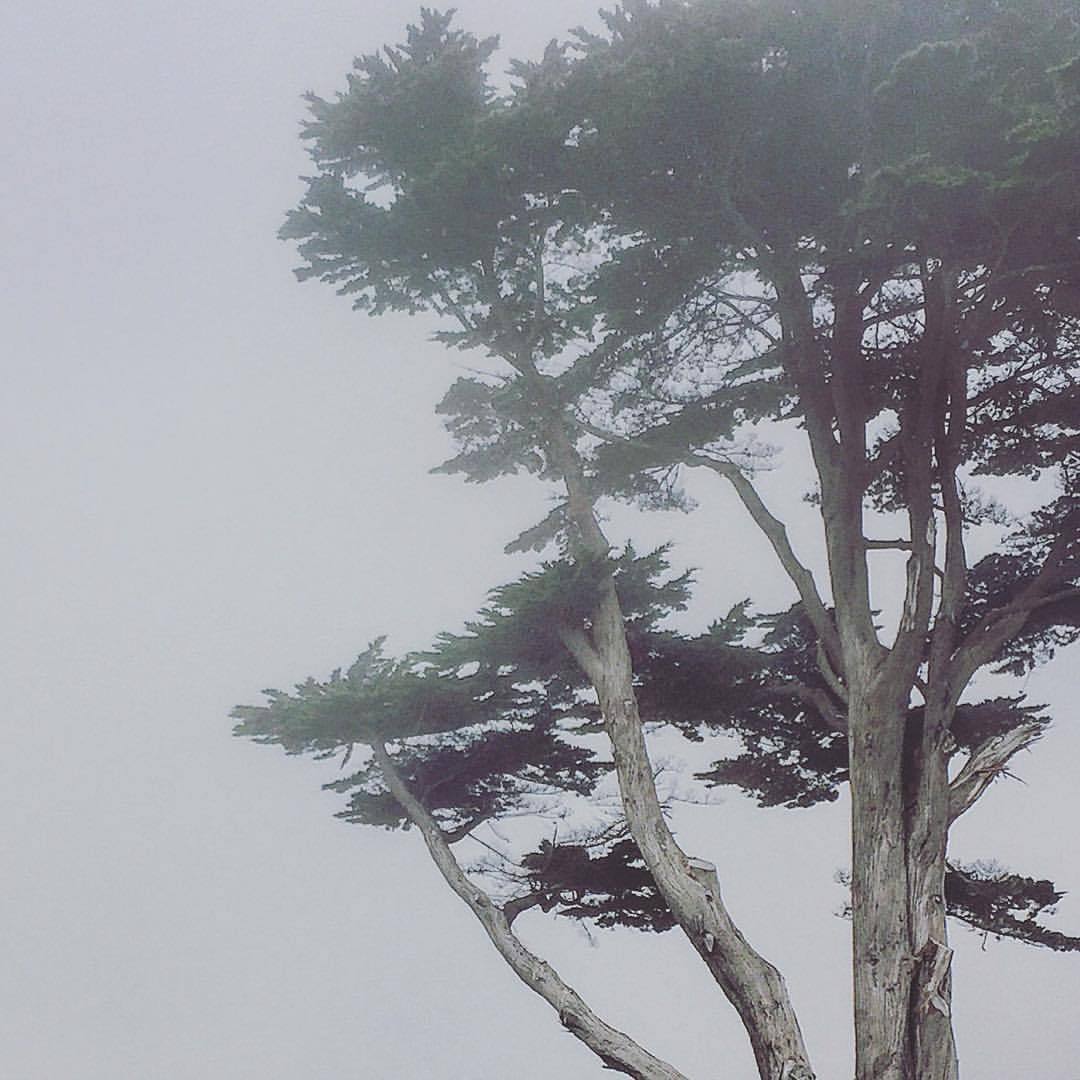
Foggy Northern California coast.
#california #mendocino #foggy (at Abalone Point)

Dusk.
#california #inverness #tomalesbay (at Point Reyes National Seashore)

Algae bloom on driftwood.
#california #inverness #tomalesbay #gerhardrichter (at Point Reyes National Seashore)

Primitive.
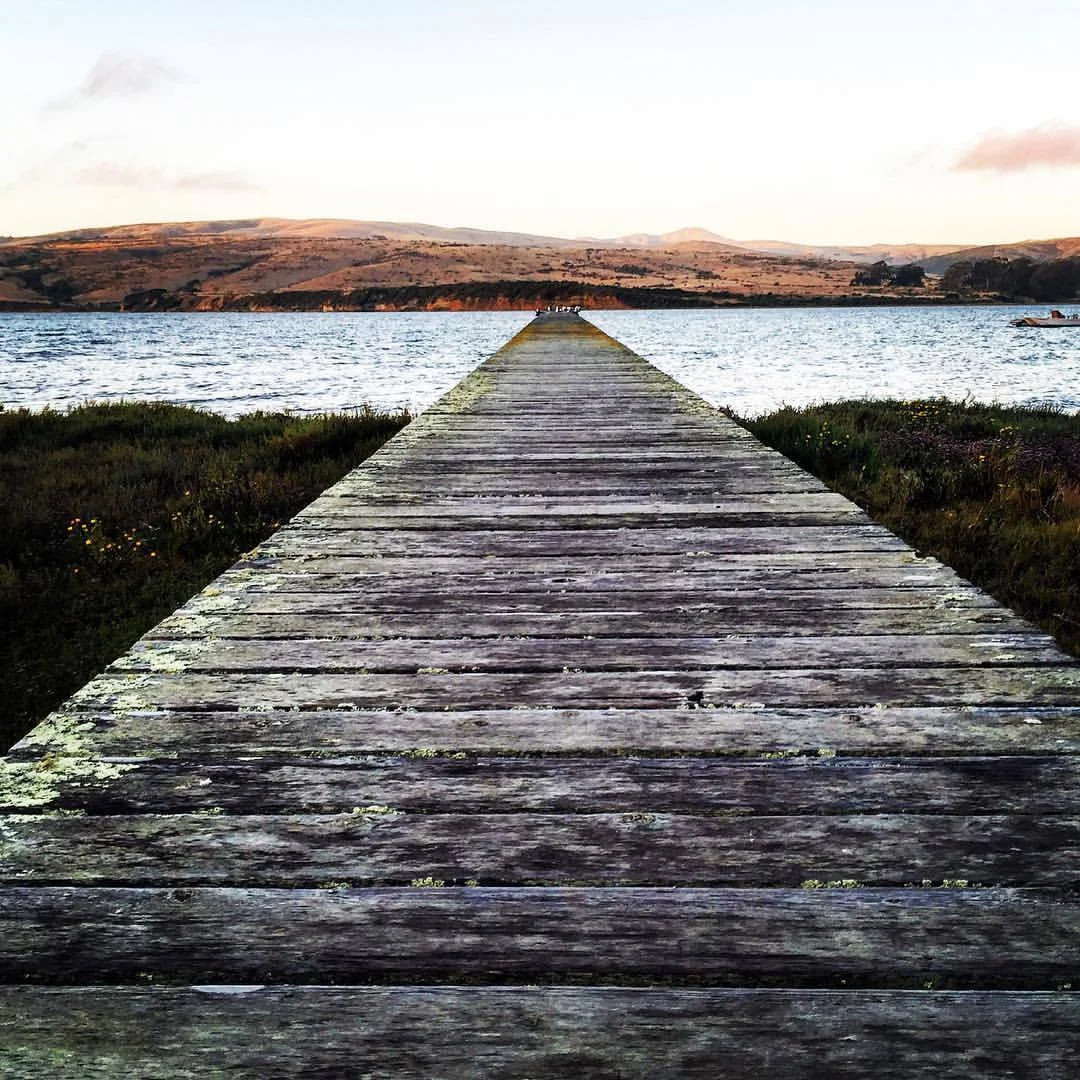
Boardwalk.
#california #inverness #tomalesbay (at Point Reyes National Seashore)

The knife loomed giant, menacing in his meager, pasty paw. With his posh British accent, he instructed me to hold it; taking care to notice the weight, the lines, the feel in the hand. He had shown me at least two-dozen knives, the choices beginning to blur, until I picked up the final piece of cutlery displayed on the black oilcloth.
I returned to the London shop three times, checking my gut to confirm that it was indeed, the piece of iron that would make me warm and weak-kneed in the kitchen, and confirming my bank balance to ensure I could afford such extravagance encased in carbon steel.
The Saji Santoku knife is handmade, each of its forty-five layers of Aogami steel hammer forged in traditional Japanese fashion. The knife is given a Kuro Uchi (Black Hammer) finish; after the forging process, the black oxidised layer of steel is left on the blade and sealed with natural resin. The result is a rustic, almost primitive aesthetic, which also helps to slow down the steel’s oxidation process. In Japanese, Aogami translates as ‘Blue Steel’, boasting a blue tinge from the alloying elements in its composition.
The master behind the blade is Takeshi Saji who, at 14 years of age, began a knifemaking apprenticeship with his uncle, a revered knifesmith. Born in 1958 in Takefu, Saji’s hometown has been a knifemaking hub for more than seven-hundred years, ranking among the four most important knife producing regions in the world; a prefectural storm of purity of iron, clarity of spring water, and highest grade of pine charcoal. Acknowledged for his unique talents, Saji was awarded the ‘Traditional Craftsman’ title, and The Ministry of Culture honoured him as a ‘Living Treasure’ of Japan, the youngest person ever to receive the honor.
And of course, the blade’s handle has its own story. Made from Arizona Desert Ironwood (Olneya Tesota), it’s one of the world’s oldest living things, with several surviving trees germinated in the 4th century. It is rare, expensive and highly stable. Olneya Tesota is the only species in the genus Olneya, has no close relatives, and grows exclusively in the Sonoran desert straddling the Arizona/Mexico border. Known as a nurse-plant, more than 500 other species (some unique to Sonora) depend upon the desert ironwood tree for survival. While the living trees are highly protected, licensed professionals are allowed to collect timber from dead desert trees, the wood incredibly well preserved thanks to the extreme environs.
Liberating the knife from a fancy linen bag too precious for its rough-hewn blade, I rinsed two-dozen Early Girl tomatoes plucked ripe and warm from the garden. Setting aside the usual serrated tomato knife, I took notice of the Santoku shape of the Saji knife’s blade, which translates from the Japanese as ‘three virtues’: a multipurpose tool to slice from the tip, dice from the center, and mince at the heel. I quartered the tomatoes with ease, diced the pork for the meatballs and minced Purple Stripe garlic cloves to sprinkle over everything. I was mesmerized. Immediately I dried the knife, ensuring no rust spots and replaced her in the linen bag, now deemed just barely swank enough for such artistry.

On the horizon: a six-hour-roasted tomato sauce soon bedazzled with pork and fennel meatballs.

Artichoke.

Hidden in the dunes.
Point Reyes National Seashore.

Plums for the galette.

The box arrived this morning,
by smiling delivery man
ear pressed to cardboard,
as if listening
for the voice of Mother Nature herself.
Opened with care and curiosity,
thousands of ladybugs
crawled from their burlap travel satchel
into raised garden beds
thick with leaves and vines
to gorge on the wicked aphid
now besmirching treasured tomatoes.
A militaristic raid
performed by a tiny army
camouflaged
in red and black polkadots.
No guts, no glory.
#garden #backyardwarrior #summer #organic

On the brink of turning.
Sending forth their most pungent perfume
just before death.
The colors brilliant,
the purples of royalty
the oranges and reds of a smoggy summer sunset.
skins just beginning to sag away from flesh,
lined with wrinkles of a chest
seen too much sun.
Gently cut with a tomato knife
juices and peels intact
tossed with citrus
and a shake of an herby Elixer hauled home from Chateauneuf du Pape.
Pastry dough, pasta frolla
from a Sicilian cookbook,
its unadorned pages as authentic as the isle itself.
Sweet butter, flour, sugar, lemon peel, eggs.
An old nonna in her white housedress pocked with kitchen stains
adds a final pinch of sugar
to caramelize the first of summer’s
stone fruits.

Poor Man’s Asparagus
In the African basket on the back porch
a colorful impulse buy at a Sunday morning market
leeks are stacked tight and tall
shaded by the overgrown Valencia orange tree.
Long, short, fat, thin, odious, sweet
a community wrapped and twined,
dirty roots dangling from thick white bulbs
caked with earth from which they’re mined.
Before Jesus strapped on sandals,
leek leaves hieroglyphed Egyptian walls,
Emperor Nero ate bushels stewed in oil
whilst Rome burns and falls.
Welsh men donned the smelly stalk in caps
setting themselves apart from British enemies,
the leek poorly regarded by the haughty French
in spite of their Vichyssoise.
On St. David’s Day the first of every March
virgins tuck the phallic leek
under snowy vestal pillows
to dream of husbands kind and meek.
Poached in lemon and old Chardonnay,
or melted in duck fat with sherry and spread on toast,
leeks transcend onions and garlic and shallots
their ethereal taste no allium boast.