Heritage Culinary Artifacts

Heritage Culinary Artifacts

  • Morsels
  • About
  • Shop
  • Contact
tumblr_mveotxRzRp1r4rx59o1_1280.jpg
October 28, 2013 by Lisa Minucci
tumblr_mveotxRzRp1r4rx59o2_1280.jpg
tumblr_mveotxRzRp1r4rx59o3_1280.jpg
tumblr_mveotxRzRp1r4rx59o4_1280.jpg

A blur of color was the valleys:  Napa, Knights, Alexander, and deep into Anderson Valley on the northwest California coast.  Having newly birthed the harvest, hillside vineyards glowed wanly in the afternoon sun, their floors littered with orange and red; the gnarled centenarian arms of the head trained vines bidding adieu to the long growing season. 

Now comes their long sleep.

But not for us.  The car was loaded for activity:  sweaters and sweatshirts, half a case of wine, hiking boots, and all-weather gear for fishing.  Blue Dream was in the ashtray, the mugs filled with Jasmine tea, and a West Coast hippie station was playing Hawaiian music. 

Quinte-fucking-ssential California. 

Tomorrow’s dawn will find us fishing for the elusive halibut.  All of the chartered fishermen wanted to take us out for salmon, not halibut.  “End of season, chances are slim, they’re not biting, blah, blah, blah.”   Hey Captain John, it’s called fishing for a reason.  I persisted until I found a willing skipper, and now my old German tank’s ancient navigation system is directed to an unknown address in Mendocino, where a small, rented cabin in the woods awaits our arrival.

A quick lunch in a talked-about pizza joint in a sleepy ag town left me wishing I’d ordered two bowls of the chopped radicchio with Reggiano, skipping the baseball-dense meatballs.  And while the pie’s crust was beautifully thin and charred, the puddle of mascarpone in the center dashed my hopes for pie nirvana.

Further northwest, we partook of Booneville’s sweet flavors:  mulled cider, an expensive linen apron, wheels of aged goat, and paper bags of red purple barley, each produced in the funky little town by very creative folk.  A little further up the street was The Apple Farm, a necessary autumn pilgrimage, owned by the talented Schmitt family. Their organic orchards grow dozens of varieties of apples, each piled in wooden boxes and laid with a knife for proper sampling.  The tiny Wickson, of which I filled a bag, was a sweet/tart delight.  The Baldwin, its seeds originally from the east coast, had a big crunch and bright acid.  My new favorite, the York, is a beauty hailing from Pennsylvania and named in the late 1800s.  There were Black Arkansas’, Winesaps and Splendors, as well as the too common Red Delicious, which never even garners appraisal from me.  Our cooler loaded with quarts of hard and sweet apple cider, we departed towards the coast in a blinding snowstorm of color, a gust of wind off the Russian River blowing through the trees.

October 28, 2013 /Lisa Minucci
tumblr_mv791cYyOS1r4rx59o1_640.jpg
October 24, 2013 by Lisa Minucci
tumblr_mv791cYyOS1r4rx59o2_1280.jpg

“Shallots are for Babies, Onions are for Men.  Garlic is for Heroes.”

Disembarking hurriedly from the train at Back Bay Station in Boston, I immediately hailed a cab. It wasn’t lobster and steamer clams dripping with salty butter for which I fantasized, nor the insipid coffee from Dunkin’ Donuts, or even the tart crunch of autumn apples from western Massachusetts. Those treats will be relished in time; each with great fondness and nostalgia for my earlier life spent in New England. Rather,it was the garlic from The Daily Catch in Boston’s North End for which I now ached.

It was a warm Friday night and the line snaking down Hanover Street was long. With only six tables inside the tiny storefront, there was always an assured wait for supper. Italian music from the bodega next door set the mood on, while ecclesiastical incense from the church across the street reminded me of Sicily. Daily Catch didn’t take names, reservations or credit cards. The menu was written in colored chalk on a large board, set against a dingy tin wall. It didn’t often deviate. In the line behind me, an older man in a finely cut, blue pinstriped blue suit and shiny black shoes tried to pimp out his much younger, blonde and pregnant wife to get ahead in line.

No dice, old man.

It was the scent of frying garlic that set me on edge; I was growing slowly mad from its perfume. Allium sativum, or garlic, is a species of the the onion genus, Allium, and counts as its family the onion, leek, shallot and chive. The compound Allicin produces garlic’s distinctive odor, which changes depending on its preparation.

Native to central Asia, the pungent bulb has been used for more than 7,000 years in kitchens from Asia to Africa; throughout Europe, and heartily embraced in the Mediterranean regions. Ancient Egyptians fed garlic to laborers building the Pyramids. Ancient Greeks extolled garlic’s benefits as an over-all curative. Ancient Romans fed it to their soldiers and sailors to increase stamina. Before humans subscribed to better living through chemistry, these cultures understood food is medicine. Garlic rightfully earned its place in the mortars of both canteen and pharmacy ever since. The writings of wise men such as Hippocrates, Galen, Pliny the Elder, and Dioscorides mentions garlic for treating conditions, such as parasites, respiratory problems, poor digestion, and low energy.

More recently, nutrition scientists at the University of Florida found garlic boosts the number of T-cells in the blood stream. The bulb’s benefits have been noted with helping to treat high blood pressure, cholesterol and heart disease. Garlic is used for building the immune system, fighting colds and flu, preventing and treating bacterial and fungal infection, and maintaining healthy liver function. Louis Pasteur discovered garlic kills bacteria and I’ve even known athletes who apply garlic’s oil topically to treat jock itch and athlete’s foot.

I studied each person waiting in line at The Daily Catch, gauging worthiness for the flavors that lie ahead. My judgements were momentarily halted as the door finally swung open and we were directed to a small table set with paper napkins. I couldn’t have been more excited if I’d been escorted to a Frette linen-draped table at a Michelin three-star in Paris. The open kitchen was set in the middle of the dining room. The single waiter jostled between the tables, taking orders, refilling water and serving food. A gregarious, twenty-three year old with a thick Boston accent, he was one of six boys in a family that owned the joint. There was one young Hispanic man with a gleaming grill flashing with his ready smile, cutting thick, doughy loaves of Italian bread and clearing tables. Behind the line was a tall, bespeckled Asian man, quite adept at keeping the dented, overworked skillets full of frying garlic and seafood and moving them quickly across the burners. We ordered two glasses of crisp white Falanghina wine from Campania to start, along with a bottle of inexpensive Sicilian Nero d’Avola. Two small plastic cups were the glassware of choice, but the lack of hand-blown crystal didn’t deter from the wine’s pleasure.

The place is known for its house-made squid ink pasta, hand-cranked each morning and as black as the ocean’s floor. We ordered the pasta smothered in minced squid with garlic, a platter of crunchy broccoli with yet more garlic; and a large, snow-white filet of haddock from the local waters, dusted with crumb and set under a blazing broiler. For a brief moment, my food dreams of past, present, and future intersected.

The college girls at the next table drank several bottles of white Zinfandel and feasted on Lobster Fra Diavolo, their cheeks taking on a rosy hue from wine, conversation and garlic.


October 24, 2013 /Lisa Minucci
A big bucket of steamer clams and a vat of sweet butter enjoyed on a sunny patio overlooking the Perkins Cove… (at Ogunquit, Maine)

A big bucket of steamer clams and a vat of sweet butter enjoyed on a sunny patio overlooking the Perkins Cove… (at Ogunquit, Maine)

October 20, 2013 by Lisa Minucci
October 20, 2013 /Lisa Minucci
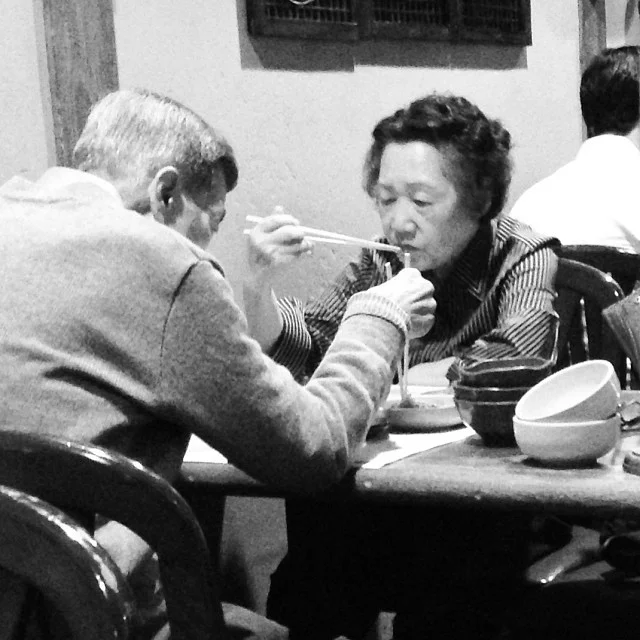
A solo lunch in NYC’s Koreatown with the locals.  House-made, dreamy clouds of tofu with fiery vegetables and mounds of sizzling mushrooms… (at Cho Dang Gol)

A solo lunch in NYC’s Koreatown with the locals. House-made, dreamy clouds of tofu with fiery vegetables and mounds of sizzling mushrooms… (at Cho Dang Gol)

October 17, 2013 by Lisa Minucci
October 17, 2013 /Lisa Minucci
It’s one of those gray and nearly winter days in northern California. The sky roars furious and dark; it rains in full, soft drops and then the clouds part, revealing a sky brilliant blue, its color reflected off the wet streets.  The chilly a…

It’s one of those gray and nearly winter days in northern California. The sky roars furious and dark; it rains in full, soft drops and then the clouds part, revealing a sky brilliant blue, its color reflected off the wet streets.  The chilly air smells of wet leaves, while smoky fireplaces burn summer’s cobwebs out of their chimneys.  I pull on a thick sweater and knit hat for the drive to a favored Italian market for good, green Tuscan olive oil and a big hunk of Parmigiano-Reggiano.  An early morning pheasant hunt filled my game bag, and rich stew and stock now perfumes my little cottage. 

I rose before dawn and went hunting by myself.  I recently read a delightful book of essays on hunting gifted to me by one of my hunting mentors.  He’s an outstanding shot who’s very quick on the draw, but during our last outing together, he bogarted all of the birds.  It was then I decided I prefer hunting alone.  Truth be told, I wanted to go by myself.  I didn’t want to take turns shooting.  I didn’t want to listen to anyone repeatedly tell me how to do something.  I didn’t want anyone interrupting the quiet solitude of Nature’s morning. 

Years ago, I hired a trainer for a couple of shooting lessons, before bad habits became ingrained.  Learning to shoot was similar to learning to drive a clutch.  Initially, I stalled out as many times as birds got lucky, but then something just clicked in my mind, and I owned it. 

My guide that long ago day was an older man, tall and heavy set with jowly cheeks, who smoked a good cigar as we walked.  He talked of his hunting trips, training his dogs, and his good fortune to have retired from a desk job to hunt full-time for a living.   While the young guys at the pheasant clubs eye me warily, the older men could not be more solicitous.  Seems the old guard feel under constant threat to give up their arms, their ways of life, their hunts.  Several old men explained to me that it’s women and children, by their enthusiastic participation, who will save the art of hunting; new blood to preserve the ritual of its spilling.  One old geezer, escorted by a pair of yellow Labs, even offered me a couple of his birds on a day I returned from the fields empty-handed.  I declined, wanting to bag, dress and cook my own.  Often times, I return home with an empty game bag, but I never mind.  Hunting and fishing and playing golf have more in common than scoring; it’s about being outside, communing with nature, bonding with your comrade in-arms (or in-clubs), breathing fresh air and taking in the sky.  It’s always a magnificent outing regardless of outcome.

This morning, I made a huge mug of Jasmine Pearl tea, loaded my shotgun and hunting bag into car, put the top down and the heater on, and drove the hour north to the fields, watching the sun rise an ashy rose.  I’ve only hunted bird on private reserves and at clubs, but today’s walk was on 15,000 acres of public lands leased to corn farmers, and managed by Fish and Game.  Field upon field of low corn stubble, separated by wide ditches nursing pools of brackish water, create perfect hideouts for birds, with plenty of corncob remnants on which for them to feast and fatten. The pre-dawn air was heavy with dew; ideal conditions for hunting game bird, as their scent lingers on the wet grasses, making the dogs crazed.  I traded a couple of very good bottles of Barolo for the company of a German short hair, the dog of a friend’s friend.  The two of us hiked for miles.  Nearby pastures held grazing sheep serenading us with an occasional bleat.   It was a gorgeous early winter day in typical northern California style – the upcoming light reflecting off the hills, the autumn patchwork still present.  

The ringed-neck pheasant is a wonder of color, its plumage deep, rich hues only Nature can produce.  The bird was first imported to the American East Coast from Asia in the early 1700s.  George Washington had pheasants roaming Mount Vernon, and Ben Franklin’s son-in-law brought them to his home in New Jersey.  Their population exploded in the late 1800s when a hunting enthusiast, a consul to China, released several dozen Chinese ring-necks into Oregon’s Willamette Valley. The birds, however, had a tough go of it in the 1960s and 1970s, as ag lands were stripped for monoculture or development.  The government got involved and Reagan signed into law The Conservation Reserve Program, aimed at re-establishing land cover to improve water quality, prevent soil erosion, and reduce loss of wildlife habitat for endangered and threatened species.  Thanks in part to voluntary participation by farmers and land owners, who plant acres of native grasses on ag lands, the CRP is the largest private-lands conservation program in the United States, benefitting many species of wildlife including upland birds, waterfowl and deer.  And pheasant.  No other game species introduced to the United States has thrived as well.

One of the first mornings in forever that wasn’t pouring a cold, unremitting rain, the ground was now a spongy mud beneath my new Danner hunting boots.   We hiked through nasty, brambly brush, my legs covered in small, thorny burrs, which would leave their marks and scratches for days.  The dog, a kindly old girl oddly named Poacher, suddenly stuck her freckled snout into the air and began to dance as if accompanying an unheard tune.  Back and forth, she swept the field in front of us, hot on the scent of a bird on this chilly morning; an incredible sight attributable to equal parts genetics, breeding and training.  The dog finally surprised a fat pheasant tucked behind a clump of grasses, flushing him quickly into the air.   Pheasants are fast; their spindly legs often sprint them into the next field before I’m able to even sight them with the tip of my shotgun. 

I bagged two beautiful male pheasants as the sun came up.  Poacher retrieved them, but it took a bit of work, cunning and handfuls of biscuits to get her to drop the birds so I could tuck them into my game bag.  I laughed out loud and cursed her Master, now understanding the origin of her name.

Instead of plucking the pheasants, I carefully peeled back their coats of feathers with the sharp point of my hunting knife, heavily salted each skin, and hung them on the front porch to dry.  An enormous cast iron meat hook I found while scouring a flea market in southern France hangs from a brick wall in my tiny kitchen; the dried pelts are destined to dangle from their sharp spikes.

The 40 species of pheasant, all originating in Asia and Asia Minor, are related to partridge, quail, grouse and guinea-fowl, all of which encompass the order Galliformes, (heavy-bodied, ground feeding birds), and all of which are, not incidentally, delicious.  I slowly roasted both birds with herbs stealthily pilfered from a neighbor’s fancy raised beds:  fresh thyme, its delicate branches covered in emerald green; a few leathery leaves of sage, and a handful of overgrown Italian parsley fronds.  Cooked to barely medium rare, I separated the meat from bone, tossing the stripped carcasses into a huge enamelware stockpot, a sixteenth birthday present from my beloved Italian grandmother.  I added a roughly chopped mirepoix, covered it all with water and wine and a palm-full of whole, black Tellicherry peppercorns, and set it to boil.  

Pheasant stock makes me weak kneed.

I shredded the cooled meat, poaching it in its pan jus with a wee bit of cubed pancetta and cipollina onion, a showering of flaky sea salt, and a generous hit of Oloroso sherry.  While that goodness gently bubbled, I diced root vegetables for texture and color, adding carrots, celery and rutabaga.  Gleefully, I blew the dust off the hand-crank pasta machine and rolled out long sheets of fresh macaroni, cutting them into large pocket squares.

I took a break from the kitchen, stepping outside to watch the shifting gray sky, smoke a bit of Mendocino green bud and contemplate the evening ahead.  My dinner guests were old friends and food people.  He is gay and riotous and whip smart.  She created and sold a food-line, is dyed blonde and works out vigorously, and cannot hold her wine.  She takes cabs every time she goes to dinner and her stories are sometimes deliciously scandalous.   

I grated a huge bowl of Parmesan and set a loaf of crusty ciabatta from a revered Sonoma bakery on an old breadboard.  A hunk of gooey Robiola, a triple cream cheese from Piedmont, had been coming up to temperature for the past couple of hours.  Bitter Italian rapini was sautéed with garlic and spicy chili peppers, dried from the summer garden’s abundance. 

The pheasant stew was spooned over the handkerchief pasta, which heartbrokenly, was just a tad too cooked.  But with a sprinkle of Maldon salt and a splash of Tuscan oil, the flavors were a fine tribute to the birds.

Catherine brought two apple tarts with enviably perfect crusts, and a jar of dense Mexican caramel sauce she made.  We drank Rochioli Sauvignon Blanc and an old Matanzas Merlot, which David insisted on decanting.

The Chinese recognized the beauty and delicacy of the pheasant more than 3,000 years ago, believing they represented prosperity and good fortune.  The Romans, true gourmands all, introduced the pheasant into Western Europe.  Julius Caesar brought the bird along when he invaded England in the first century B.C., also believing the pheasant auspicious.  Raising our nearly drained glasses, we toasted the incredible bird, which nourished us this nearly winter evening.

October 16, 2013 by Lisa Minucci
October 16, 2013 /Lisa Minucci
Creativity in NYC’s West Village… (at Waverly Place)

Creativity in NYC’s West Village… (at Waverly Place)

October 15, 2013 by Lisa Minucci
October 15, 2013 /Lisa Minucci
I was craving the pain of it; wildly anticipating the rush of heat, the throbbing on my tongue, the profuse sweating. Autumn is particularly suited to scratching my itch. The garden is now abundant with mature Habanero peppers, having been primped a…

I was craving the pain of it; wildly anticipating the rush of heat, the throbbing on my tongue, the profuse sweating. Autumn is particularly suited to scratching my itch. The garden is now abundant with mature Habanero peppers, having been primped and preened and fawned over for months. Innocently they hang from spindly branches, like small holiday ornaments; bursts of orange, yellow and red hidden behind long green fronds. Their thin, waxy flesh belies the danger enclosed in the colorful little packages. But behind Habanero’s heat lie complex flavors of citrus, stone fruit and smoke. Perhaps I project the latter element while envisioning a fire roaring on my tongue. 

Scientists theorize the high I continually seek from eating chilies is produced by surging endorphins. The brain releases this natural pain reliever in response to the joyful agony of eating capsaicin, the spice element in chilies, which affects all mammals. It’s likely that capsaicin was a natural adaptation by peppers so animals wouldn’t eat them. Indeed, it’s only the refined human palate that has embraced chilies and the pleasurable pain they inflict.

Originating more than 6,000 years ago from lands along the Amazon River, hot peppers (capsicums) had a place on the tables of Central and South America. Christopher Columbus ensured their infiltration into the kitchens of Europe, Asia and Africa, and by the 1500s, Habaneros were in demand by gourmands in China and India. Chilies were one of the first domesticated plants in the New World and are now enjoyed with gusto each day by one in four persons, masochistic epicures all.

My first flirt with the fire was many years ago; sitting on a fine-sanded beach in southern Thailand, wearing only a gauzy wrap and eating grilled shrimp with my fingers. Coated in a searing pepper sauce, the crustaceans were unbelievably piquant. The young Thai boys manning the coals giggled as I ordered yet another platter, my eyes red and watering. More than a dozen shrimp later, I earned an iced cold liter of Singha beer, as well as their begrudging respect.

Unlike many other addictions, my cravings for Habanero peppers will never find me draining my bank account at 3am or being the object of an embarrassing family intervention. The habit-forming little orbs even claim health benefits, as the hotter the pepper, the more capsaicin they contain. These colorless, odorless compounds boast antioxidants, decrease cholesterol, and kill off the stomach bacteria that cause ulcers. Before there was better living through chemistry, our ancestors planted chilies to naturally ward off microbes. Capsaicin even boost immunity, and increase heat production and oxygen consumption 20 minutes after eating, meaning your body is burning calories. 

The Habanero was recently listed in the Guinness Book of World’s Records as the hottest chili, but has since been displaced. But make no mistake: Habanero chilies are intensely hot, rating 100,000-350,000 on the Scoville scale, which measures capsaicinoid content in peppers through liquid chromography. An obsessive American pharmacist and pepper aficionado Wilbur Scoville created the scale in 1912; the Pimento pepper having a couple hundred units and the Infinity chili boasting a score of around one million.

Although it’s easy to build up a tolerance, the tongue becoming de-sensitized to the fire, I still remain enthralled by chilies, hence the variety and abundance of peppers in my garden. Like most peppers, Habaneros thrive in hot weather and need infrequent watering, as moist roots mean bitter peppers. 

It is the mystical Black Habanero I seek to plant for next Spring’s pepper pot. A cross of Purple Habanero and Long Chocolate Habanero, it is reputed to be very hot and exotically flavorful with notes of raisin, earning a Scoville rating of 400,000-450,000 units. 

The dehydrator is now constantly whirring, emitting wafts of dark, smoky aromas, and ensuring mountains of dried peppers to enliven my winter suppers. Tonight however, small slivers of fresh Habanero, chopped cilantro and shaved garlic will be tucked into the folds of a pork roast, infusing the lovingly butchered swine with the heat of the final days of summer.

October 03, 2013 by Lisa Minucci
October 03, 2013 /Lisa Minucci
A flowering cardoon from Napa’s BOCA Farm.
Color enhancement tool unnecessary… (at at home in Napa)

A flowering cardoon from Napa’s BOCA Farm.
Color enhancement tool unnecessary… (at at home in Napa)

September 24, 2013 by Lisa Minucci
September 24, 2013 /Lisa Minucci
Garden art. (at at home in Napa)

Garden art. (at at home in Napa)

September 22, 2013 by Lisa Minucci
September 22, 2013 /Lisa Minucci
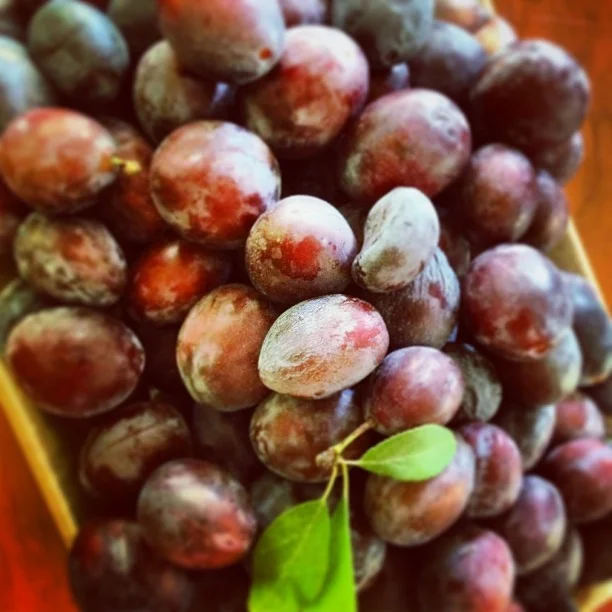
Last of the season’s hand-picked French plums destined for a buttery crusted tart… (at at home in Napa)

Last of the season’s hand-picked French plums destined for a buttery crusted tart… (at at home in Napa)

September 21, 2013 by Lisa Minucci
September 21, 2013 /Lisa Minucci
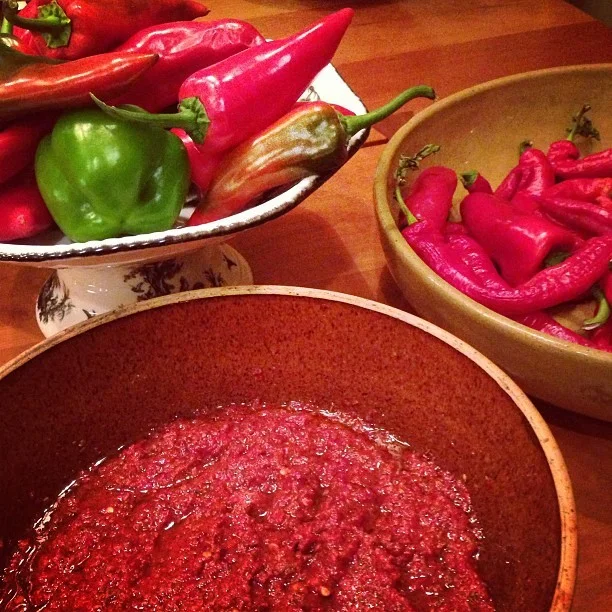
First Harissa of the season…  Made in batches to enliven our hearty winter suppers… (at at home in Napa)

First Harissa of the season… Made in batches to enliven our hearty winter suppers… (at at home in Napa)

September 17, 2013 by Lisa Minucci
September 17, 2013 /Lisa Minucci
A plethora of colors at the National Heirloom Expo in Sonoma. (at Sonoma County Fairgrounds)

A plethora of colors at the National Heirloom Expo in Sonoma. (at Sonoma County Fairgrounds)

September 10, 2013 by Lisa Minucci
September 10, 2013 /Lisa Minucci
tumblr_msitf42UTo1r4rx59o1_1280.jpg
September 02, 2013 by Lisa Minucci
tumblr_msitf42UTo1r4rx59o2_1280.jpg

It’s well past midnight and I’m splayed out on a warm roof watching for shooting stars, the merry-go-round beam from the lighthouse on the beach below keeping me awake.  Slightly drunk from mature Nero d’Avola wine and a hefty after-dinner tumbler of black, bitter Amaro, I hear it crystal clear:  Italian songs played on strings coming from over the hill.  The moon was almost full; the silvery leaves on the venerable olive trees glittering in the dark like tiny paparazzi flash bulbs.  The whitish souls of those buried in the timeworn limestone hills glowed in the moonlight, their collective history sighing an empathetic breeze through the durum wheat fields.

The isle of Favignana lays a short ferry ride away from the western coast of Sicily.  The hydrofoil was full of day-trippers and old men returning to their wives, errands on the mainland completed.  The ancient Greeks called Favignana ‘goat island’, which paints an accurate picture of the terrain:  calcareous rock hills covered in low scrub with views of the green Tyrrhenian Sea from most any perch.  As with all of Sicily, Favignana’s unique flavor has been influenced by history’s constant invaders; Normans, Arabs, Spaniards and Greeks have all left their marks.

But really, it’s all about the tuna.

Plentiful in the seas around Favignana, the poor tuna has been a hunted and exploited creature for more than 500 years.  Indeed, the island’s 15th century owner, Giovanni di Karissima, was donned ‘Baron of Tuna.’ 

The antiquated fishing technique for tonnara is referred to as mattanza or massacre, which is exactly what it was.  Murals in the tiny town depict thick, swarthy men holding nets penning dozens and dozens of tuna, the green waters a frothy red from their slaughter.  One day every February, Favignana still makes a show of the mattanza to tourists, but their cannery is long closed, both fish and their stalkers sacrificed by another era.

Small food shops, with extremely fine selections of cured meats, goat and sheep’s milk cheeses, meaty green olives, local oils, thick crusty breads, and tomatoes still on their vines also offer a dizzying array of tuna:  jarred, canned, dried, dust.  I greedily loaded hunks of vacuum-sealed dried tuna roe, or bottarga into my basket, envisioning a late winter supper of spaghetti, rich with garlic and fiery red chilies fried in olive oil, topped with fluffy mountains of salty, finely shaved tuna bottarga. 

The unsmiling shopkeeper, oddly not a fan of tourists, grudgingly held my purchases while I found lunch.  Favignana boasts many fine restaurants, each specializing in seafood hauled in daily from its waters.  Tables spilled out onto the main square, now roasting in the midday sun.  We walked past an elderly woman in a crocheted navy blue dress sitting in a wooden chair in the shade of The Bank of Napoli, behind a creaky table piled high with fresh and salted capers.  She was fast asleep, head thrown back, mouth wide open. 

We escaped the heat under an enormous canopy lined with tables and set with linen and good stemware.  I immediately ordered an extra-large Peroni beer and a huge bucket of ice, nibbling rosemary breadsticks while deciphering the Italian menu.  Soon, platters of fish crudo arrived; thin slices of swordfish and tuna drizzled with green oil and flaked Sicilian salt as fine as the finest Japanese sashimi.   Head-on shrimp grilled to pink perfection and flavored with nothing more than the ocean’s brine were peeled and eaten by hand.  We sipped Grillo, a simple Sicilian white wine, while we filleted whole Orata, caught under the stars the night prior and presented to the chef at the early morning fish market.  Grilled simply with fresh oregano, thyme and lemon, it’s white flesh spoke of the island’s seafaring history and its understanding of life’s exalted pleasures.

Two wheels are the most acceptable form of transport around the island.  Riding a rented motorbike for the first time in years absolutely terrified me.  I pleaded with the Gods of Favignana to just let me make it through the long, dark tunnel that bore through a mountain dividing the small island.  Dirty, plastic flowers tied sporadically to the tunnel’s guardrail did little to soothe my fears.  Once on the other side of the tunnel, I made a beeline for the bike shop, trading in the motorcycle for an electric bike, which hurt my ass but soothed my soul and curved my thighs, now thick from pasta and pastry. 

We pedaled past coves, the gentle green waters dotted with the fine, bobbing behinds of snorkeling Italian men while their haggardly bikini-clad wives, black from too much sun, waded at the shoreline, occasionally yelling directives at their oblivious husbands.

Arriving back to our inn late in the day, I hung my sarong and suit on the porch to dry, gleefully realizing I hadn’t worn a bra or mascara for weeks.   I raced to the roof to catch the gloaming, its palette of gauzy colors eerily reminiscent of Claude Monet’s San Giorgio Maggiore at Dusk, a 1908 painting of a sunset seen further up the Italian coast in Venice.  I glanced down at my bare feet, gloriously dressed with fine sand and dried cannoli cream dribbled from the shell of my late afternoon indulgence.

September 02, 2013 /Lisa Minucci
Lunchtime under a canopy in Sicily.  The waiter buries my very large bottle of Italian beer deeply into a sweating ice bucket.  The grilled shrimp, drizzled with spicy green oil, taste exquisitely of the salty Tyrrhenian Sea.  At the next table, a l…

Lunchtime under a canopy in Sicily. The waiter buries my very large bottle of Italian beer deeply into a sweating ice bucket. The grilled shrimp, drizzled with spicy green oil, taste exquisitely of the salty Tyrrhenian Sea. At the next table, a lanky young man with a full head of curly black hair crosses himself before digging into a tangle of spaghetti studded with periwinkles, bemoaning the chef’s heavy-handed use of parsley to his sullen date. As church bells announce the hour, a deeply tanned old man, his bald pate glistening in the midday heat, strides across the piazza in a blindingly white shirt unbuttoned to his navel, a long gold chain sparkling against his hairless chest. (at Isola Di Favignana)

August 20, 2013 by Lisa Minucci
August 20, 2013 /Lisa Minucci
Ballaro Street Market, Palermo, Sicily (at Mercato di Ballarò)

Ballaro Street Market, Palermo, Sicily (at Mercato di Ballarò)

August 12, 2013 by Lisa Minucci
August 12, 2013 /Lisa Minucci
tumblr_mr0la6Un8F1r4rx59o1_1280.jpg
August 04, 2013 by Lisa Minucci
tumblr_mr0la6Un8F1r4rx59o2_1280.jpg

Our tiny car came to a screeching halt on the one-lane road clinging to the side of a mountain.  Dozens of cows and bulls, their horns and hooves glinting in the late morning sun, were being herded to pasture by a grizzled old man and a mangy dog, yapping commands to keep the bovine in line.  There was little we could do but crawl along behind the parade, admiring rumps and gracefulness of stride. 

For weeks, we’d been admiring the ancient town of Erice long distance, as it’s solidly perched at more than 2,500 feet on the tip of a mountain, towering over western Sicily.  Its location, however, did little to repel invaders throughout history:  Elymians, Greeks, Arabs, and Normans all came and went, leaving cultural and architectural marks on this stunning peak. Hercules was a fan of Erice, as were Venus and Aeneas.  The road to Erice is quite steep and very narrow, full of hairpin twists and turns, making me re-think my planned wine intake with lunch.

We parked our little rental car at the base of town, grateful she was manual drive, although only providing enough juice to scale the side of the mountain when the AC was off.  The Sicilian sun, as always, was relentless as we walked to the top of Erice in search of its heart and soul.  Views of the Tyrrhenian Sea, a beckoning periwinkle blue, were visible round every corner, the tangy air tasting of salt and stone.

Incredibly well preserved, the miniscule town is a highly sophisticated work of art.  The entire maze of Medieval streets are cobbled in matching stones carved in highly intricate detail and polished to a sheen by hundreds and hundreds of years of sun, salt and foot and hoof traffic.  In proper Roman Catholic fashion, Erice boasts more than 60 churches, many of them significant. 

But on this Sunday, my hunger was more in the realm of the physical.

We made a quick stop into famed Pasticerria Maria Grammatica.  Its namesake was orphaned during WWII, entering Erice’s convent at the age of 11.  She trained as a baker’s apprentice, learning the ancient art of conventual pastry making. Fifteen years later, she left her habit behind and started her own small workshop.  A specialty, St. Agatha cakes, are shaped like breasts and filled with cream; honoring the Christian girl who was tortured by pagans, her breasts torn off with pincers.  Twisted and wrong, the cakes were nonetheless delicious.

We slid into high backed chairs for an elegant late lunch on a porch overlooking the sea.  Waiters in black coats floated from table to table, attending to multi-generational families taking Sunday lunch together.  Busiate, thick, twisted ribbons of Durum wheat pasta, were tossed with eggplant, basil, mint, garlic and ground almonds, a special Sicilian pesto from the town of Trapani, and served family style on bright red ceramic platters.  Grilled tuna and swordfish hauled onto the docks below were lavished with local, green oil and fresh herbs and washed down with special edition Moretti beer that drank like fine Belgian ale.  A well-fed cat sat at my feet, greedily accepting hunks of fish skin from my fingers, slick with the fine oil.  Upon departing, we stopped into the kitchen to offer the chef our hearty thanks.  He smiled, preening for a photo while thinly slicing fish crudo for the dinner service.

August 04, 2013 /Lisa Minucci
Late supper… pomodoro, proscuitto, mozzarella, arugula, parmesan on a thin, charred crust…
Last pie in Palermo before venturing back west… (at Frida Pizzeria)

Late supper… pomodoro, proscuitto, mozzarella, arugula, parmesan on a thin, charred crust…
Last pie in Palermo before venturing back west… (at Frida Pizzeria)

August 03, 2013 by Lisa Minucci
August 03, 2013 /Lisa Minucci
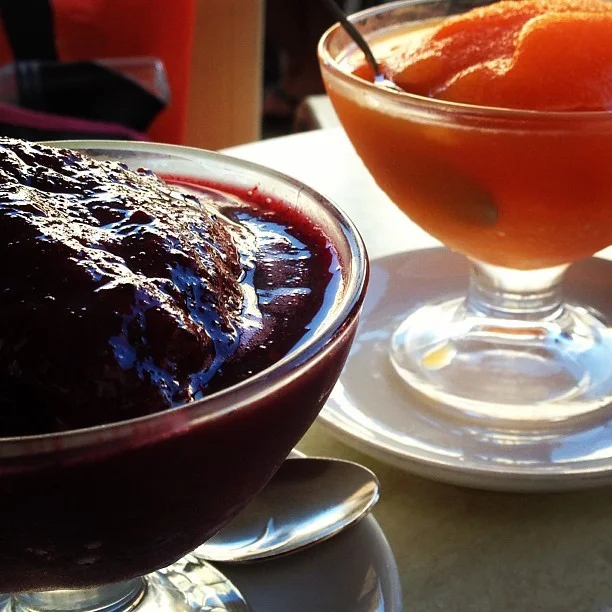
Refreshing mulberry and mandarin granita handmade with fresh ingredients by a proud Sicilian on the isle of Favignana… (at Bar gelateria Europa)

Refreshing mulberry and mandarin granita handmade with fresh ingredients by a proud Sicilian on the isle of Favignana… (at Bar gelateria Europa)

August 02, 2013 by Lisa Minucci
August 02, 2013 /Lisa Minucci
August is the month of the lion!  This king of the jungle was created in the 15th century with marble inlay to embellish an ornate church in Palermo, Sicily (at Chiesa Santa Caterina Vergine e Martire)

August is the month of the lion! This king of the jungle was created in the 15th century with marble inlay to embellish an ornate church in Palermo, Sicily (at Chiesa Santa Caterina Vergine e Martire)

July 31, 2013 by Lisa Minucci
July 31, 2013 /Lisa Minucci
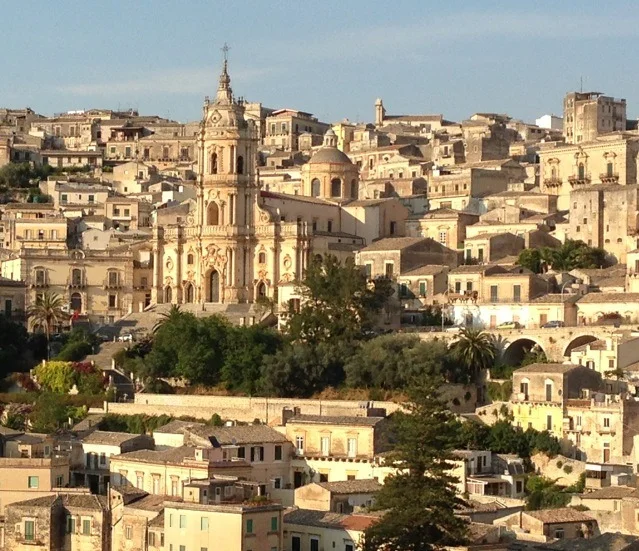
I hail from a time and place that dictates when a woman arrives home after sunrise wearing a black dress with sequins, she’s performing the walk of shame.  In Modica, Sicily, it’s merely the morning walk of the poodle.  In this small, medieval town …

I hail from a time and place that dictates when a woman arrives home after sunrise wearing a black dress with sequins, she’s performing the walk of shame.  In Modica, Sicily, it’s merely the morning walk of the poodle.  In this small, medieval town buried deep in Hyblaean Mountains, women dress for the day and men gather to smoke, play cards and read La Stampa. 

Not unlike many cities in Italy, Modica is built into the hillside, protecting itself from history’s hordes of marauding invaders.  This invader had to ascend and descend hundreds and hundreds of stone steps in the blazing heat to reach the main boulevard, leaving me in a constant sweaty stupor but feeling pleasantly liberated to indulge in the city’s gastronomic delights:  freshly filled cannolo for breakfast, ropes of thick-cut pasta with mint, tomato and tuna bottarga for lunch, and the region’s famed, succulent black pork from the Nebrodi Mountains for dinner; its lovely layer of delicious fatback and sweet yet gamey meat the stuff of food fantasy.

Founded in 1360 B.C., Modica is a UNESCO World Heritage Site, its houses and palazzos impressively built on top of one another.  Despite being ravaged by earthquakes and floods, the decaying city boasts notable Sicilian Baroque architecture, usually situated next door to the collapsing rubble of a long-abandoned house, decorated only with a rusting padlock and Virgin Mary statue.

In addition to Baroque arts, Modica is also renowned for its 400-year tradition of chocolate making.  As Sicily was part of the Spanish kingdom for many years, it was often the recipient of new foods hauled back from South America, including cacao.  This diminutive city is filled with dozens of shops hand-making an unusual, granulated chocolate produced with only cacao and sugar, and often flavored with spicy pepperoncino, jasmine or orange blossom.

Sunset found me propped in a chair on our little patio, a generous tumbler of chilled Amaro in hand, watching the gauzy pink sky wash over the ancient city, and awaiting the tiny sparrows which emerge each evening to hunt their dinner.  So close they fly I can hear the flutter of their wings and feel the air move above my head.  As if obeying a higher power, they return to their nests as church bells announce 9pm.

Huffing and puffing and disheveled as I made my way to our hotel perched atop Modica, it was somewhat inconceivable that I’d just returned from an elegant midday meal in a neighboring town.  The delightful wine high so thoughtfully acquired at lunch now sweated out, I sat on a stone step in the shade to compose myself.  In these old stone alleyways, it’s not unusual to catch a trace of frying garlic, roasting game, sweet night-blooming jasmine or tangy piss.  At this moment, however, I was completely overwhelmed with the heady scent of wild herb.  On the patio below, an old lady in a blue housedress was picking through an enormous bundle of dried oregano, sold quite commonly throughout southern Italy. She sat quietly in the shadow of a fig tree, its trunk sprouting through a crack in a crumbling stonewall, separating the herb’s leaves from its stems into a well-used colander, her patio looking out on the medieval town, the view unchanged over hundreds of years.


July 30, 2013 by Lisa Minucci
July 30, 2013 /Lisa Minucci
  • Newer
  • Older

© 2011-2018, LISA MINUCCI